
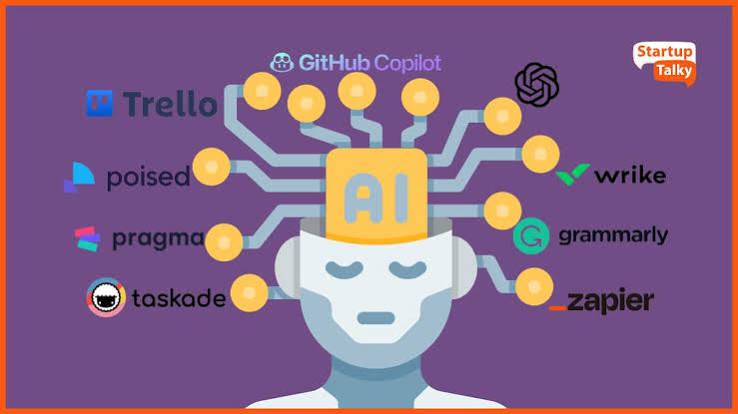
Companies that adopt AI productivity tools for business build operational leverage faster than companies that rely only on hiring.
Why AI Productivity Tools for Business Create an Immediate Competitive Advantage

Every Series A company reaches a stage where growth creates pressure across every department. Product teams manage expanding roadmaps, sales teams chase larger pipelines, customer success handles increasing support requests, and marketing produces more content than ever before. Hiring solves part of the problem, but every new employee adds recruiting costs, onboarding time, management overhead, and operational complexity.
AI productivity tools for business provide another path.
Instead of increasing headcount for repetitive work, companies automate routine tasks while employees focus on strategic decisions. Engineers spend less time writing boilerplate documentation. Marketing teams generate campaign drafts more quickly. Customer support organizes knowledge bases faster. Finance teams summarize reports without manually reviewing every document.
The value comes from improving execution speed rather than replacing expertise.
Consider a software startup preparing a major product release.
The launch requires:
- Product documentation
- Technical tutorials
- Internal training materials
- Sales enablement resources
- Customer onboarding guides
- Marketing campaigns
- Executive updates
Traditional workflows distribute these tasks across multiple teams and long review cycles.
With AI productivity tools for busineshttps://harshchhillar.com/ai-chat-is-becoming-the-fastest-interface-between-business-problems-and-business-decisions/s, teams create first drafts, organize information, summarize technical updates, and automate repetitive formatting within hours. Subject matter experts refine the outputs instead of building every document from scratch.
That workflow accelerates execution without lowering quality standards.
Technical founders recognize this principle because software engineering already depends on automation for testing, deployment, monitoring, and infrastructure management. AI productivity tools for business extend the same philosophy to knowledge work.
Organizations gain speed because employees spend more time solving problems and less time repeating administrative tasks.
AI Productivity Tools for Business Deliver Higher ROI Through Operational Efficiency

Series A companies operate under constant resource constraints.
Every investment competes for limited capital.
Every new hire increases fixed costs.
Every delayed project affects revenue opportunities.
That reality makes operational efficiency a strategic priority.
AI productivity tools for business improve return on investment by reducing time spent on low-value activities.
Marketing teams generate campaign outlines before refining messaging.
Sales representatives summarize prospect research before meetings.
Legal teams organize contract reviews more efficiently.
Operations managers automate recurring reports.
Human resources prepare interview summaries and onboarding documentation with greater consistency.
The cumulative effect becomes significant.
Imagine a customer success organization managing hundreds of enterprise accounts.
Without automation, account managers manually review meeting notes, prepare follow-up emails, update customer records, and summarize action items after every conversation.
Using AI productivity tools for business, those repetitive tasks require far less manual effort.
Account managers dedicate more attention to customer relationships rather than administrative updates.
The organization improves productivity without expanding support teams.
Finance departments benefit as well.
Budget reviews often require extensive document analysis.
AI accelerates information extraction, categorization, and summarization while financial professionals maintain decision-making authority.
That approach reduces administrative workload without removing human oversight.
Operational efficiency compounds over time.
Each automated workflow saves minutes.
Hundreds of repeated workflows save hundreds of hours.
Leadership gains additional capacity without proportionally increasing operational expenses.
For founders evaluating software investments, this improvement represents measurable business value rather than theoretical innovation.
AI Productivity Tools for Business Improve Decision-Making Across Every Department

Growing organizations collect more information than leadership can manually process.
Customer feedback.
Sales conversations.
Support tickets.
Engineering updates.
Financial reports.
Market research.
Competitive intelligence.
Meeting transcripts.
Important insights often remain buried because teams cannot review every document efficiently.
AI productivity tools for business organize information into actionable knowledge.
Product managers identify recurring customer requests.
Sales leaders recognize objections across multiple conversations.
Marketing teams discover emerging industry themes.
Support managers detect common service issues.
Executives receive structured summaries instead of disconnected information.
Imagine an enterprise software company receiving thousands of customer feedback submissions every month.
Manual analysis requires extensive time.
AI categorizes comments, identifies recurring requests, groups related issues, and produces structured summaries for product leadership.
Decision-makers review organized insights instead of raw data.
The process accelerates strategic planning.
Cross-functional collaboration also improves.
Engineering, marketing, sales, and customer success access standardized summaries generated through AI productivity tools for business.
Departments align around shared information rather than conflicting interpretations.
That consistency reduces communication delays.
Leadership meetings become more productive because participants discuss solutions instead of gathering missing information.
Better information leads to better decisions.
Better decisions improve execution.
Execution drives business growth.
Technical founders already trust analytics platforms for operational visibility.
AI extends that capability by making unstructured information easier to analyze and apply.
AI Productivity Tools for Business Scale With Organizational Growth
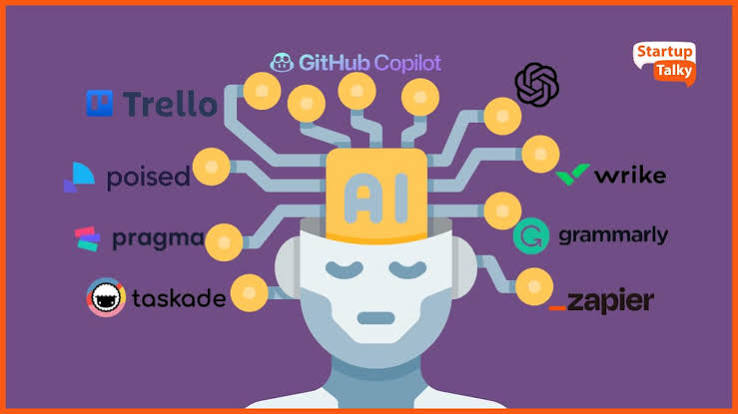
Many productivity improvements lose effectiveness as companies expand.
Manual workflows become increasingly difficult to maintain.
Administrative work grows faster than revenue.
Communication complexity increases.
Managers spend more time coordinating teams.
AI productivity tools for business scale more effectively because automation handles repetitive processes consistently across larger organizations.
Consider employee onboarding.
A startup hiring five employees each quarter manages onboarding manually.
A company hiring fifty employees each quarter requires standardized systems.
AI generates onboarding documentation, summarizes training materials, organizes internal knowledge, and supports employee questions with structured information.
Human managers focus on coaching rather than repeating introductory content.
Sales organizations experience similar advantages.
As sales teams expand into new markets, managers require consistent messaging, updated product information, and organized competitive intelligence.
AI productivity tools for business distribute standardized knowledge across the organization while allowing local customization where necessary.
Operations teams also benefit.
Recurring reports, project updates, meeting summaries, and performance dashboards follow repeatable workflows.
Instead of assigning additional administrative staff, organizations automate repetitive documentation.
That scalability becomes increasingly valuable during rapid growth.
Founders frequently discuss engineering scalability.
Operational scalability deserves equal attention.
Every hour saved through automation becomes available for innovation, customer engagement, strategic planning, or product development.
Organizations that integrate AI productivity tools for business into everyday workflows build systems that improve continuously.
Teams refine prompts.
Managers optimize workflows.
Departments standardize processes.
Knowledge bases expand.
Automation becomes more valuable with every iteration.
The companies that achieve the strongest results rarely deploy AI across every function simultaneously.
They identify repetitive processes with measurable business impact.
They establish governance.
They monitor outcomes.
They refine implementations based on operational feedback.
That disciplined approach transforms AI from a collection of isolated tools into a scalable operational capability.
For Series A founders focused on sustainable growth, AI productivity tools for business represent more than software investments.
They create organizational leverage.
Leverage enables faster execution.
Faster execution strengthens customer experience, accelerates product delivery, and improves operational resilience without requiring proportional increases in headcount.
Several Wikipedians have formed this collaboration resource and group dedicated to implementing constructive uses of LLMs and other AI models as editing tools on Wikipedia. This page and its subpages contain their suggestions and various resources; it is hoped that this project will help to focus the efforts of other Wikipedians interested in the topic. If you would like to help, please add yourself as a participant in the project, inquire on the talk page, and see the ongoing and proposed projects.