

Companies that integrate ai chat into everyday workflows reduce operational friction, accelerate decision-making, and unlock productivity gains that traditional software interfaces struggle to match.
Why AI Chat Changes How Teams Work
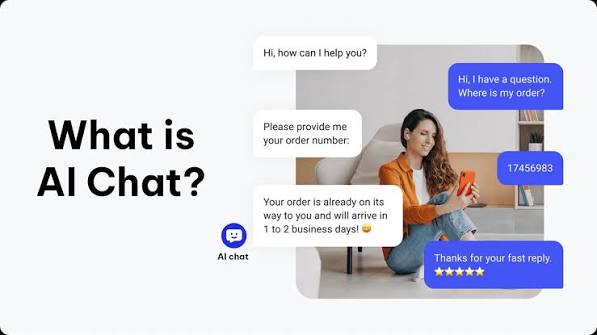
Every growing company eventually reaches the same challenge: information spreads across documents, emails, dashboards, chat platforms, ticketing systems, and knowledge bases. Employees waste valuable time searching for answers instead of solving customer problems or building products.
ai chat changes that workflow.
Instead of navigating multiple applications, employees ask questions in natural language and receive structured answers within seconds. A product manager can summarize feature feedback, a salesperson can retrieve product documentation, and an engineer can locate technical specifications without switching between several tools.
The advantage comes from simplifying access to information.
Consider a Series A SaaS company preparing a major feature release.
The launch requires collaboration between engineering, product, customer success, marketing, and sales. Each department stores information in different systems.
Without ai chat, employees search manually across documentation, internal wikis, meeting notes, project management software, and communication platforms.
With ai chat, teams ask direct questions such as:
- Which customers requested this feature?
- What changed in the latest release?
- Which onboarding guides require updates?
- What objections did sales hear most often?
- Which bugs remain unresolved?
The system delivers relevant information quickly, allowing teams to spend more time executing rather than searching.
Technical founders already invest heavily in developer productivity through automation, CI/CD pipelines, and cloud infrastructure. ai chat extends the same philosophy to organizational knowledge.
Rather than replacing expertise, it removes unnecessary friction between employees and the information they need.
AI Chat Delivers Measurable ROI Through Faster Decision-Making
Business leaders rarely struggle because information does not exist.
They struggle because information arrives too slowly.
Managers often review dozens of reports before making decisions. Sales leaders analyze CRM data manually. Customer success teams summarize support conversations. Executives collect updates from multiple departments before leadership meetings.
These workflows consume valuable time.
ai chat shortens that cycle.
Instead of reading hundreds of pages of documentation, decision-makers ask focused questions and receive concise summaries supported by existing business data.
Imagine a startup reviewing customer feedback after launching a new feature.
Support tickets reveal recurring complaints.
Sales representatives report new objections.
Customer success teams document onboarding challenges.
Product managers collect feature requests.
Rather than manually combining these sources, ai chat organizes and summarizes the information, allowing leadership to identify patterns quickly.
That faster access improves business outcomes because teams respond sooner.
Marketing departments benefit as well.
Campaign performance often depends on rapid iteration.
Marketers ask ai chat to summarize campaign results, identify common customer questions, organize competitor research, or draft initial messaging based on approved brand guidelines.
The marketing team spends more time refining strategy instead of gathering information.
Finance teams experience similar improvements.
Budget reviews require extensive document analysis.
Rather than manually extracting insights from multiple spreadsheets and reports, finance professionals use ai chat to summarize financial information before validating conclusions through detailed analysis.
The technology supports professionals without replacing their judgment.
For Series A founders managing limited resources, these efficiency gains improve operational leverage while avoiding unnecessary administrative expansion.
AI Chat Strengthens Collaboration Across Every Department
Growing companies depend on cross-functional collaboration.
Engineering builds products.
Marketing communicates value.
Sales generates revenue.
Customer success supports adoption.
Operations coordinate execution.
Each department creates valuable knowledge.
Unfortunately, much of that knowledge remains isolated inside individual tools.
ai chat creates a more connected organization by making information easier to discover and share.
Consider an enterprise software company preparing for a customer renewal.
The account manager needs:
- Product roadmap updates
- Open engineering issues
- Previous customer meetings
- Contract information
- Support history
- Feature adoption metrics
Without ai chat, collecting this information may require conversations with multiple departments.
With ai chat, the account manager retrieves a structured summary through a single conversational interface while respecting organizational permissions and data access policies.
The result is faster customer engagement.
Engineering teams also gain productivity.
Developers frequently search documentation, API references, coding standards, architecture decisions, and previous technical discussions.
Instead of manually reviewing large knowledge repositories, engineers ask targeted questions through ai chat and locate relevant information more efficiently.
Human resources benefit in similar ways.
Recruiters summarize interview feedback.
Managers access onboarding documentation.
Employees locate company policies without contacting HR repeatedly.
Operations teams automate recurring documentation requests.
Leadership benefits because organizational knowledge becomes easier to access without increasing management overhead.
As companies scale, communication complexity increases naturally.
ai chat reduces that complexity by making information retrieval conversational instead of procedural.
Employees spend less time navigating systems and more time creating value.
AI Chat Scales Operational Knowledge Without Increasing Complexity
Every successful startup eventually encounters a knowledge management problem.
Processes evolve.
Documentation expands.
Employee count increases.
Customer interactions multiply.
Information becomes harder to maintain.
Hiring additional coordinators or knowledge managers cannot fully solve this challenge.
ai chat provides a scalable alternative.
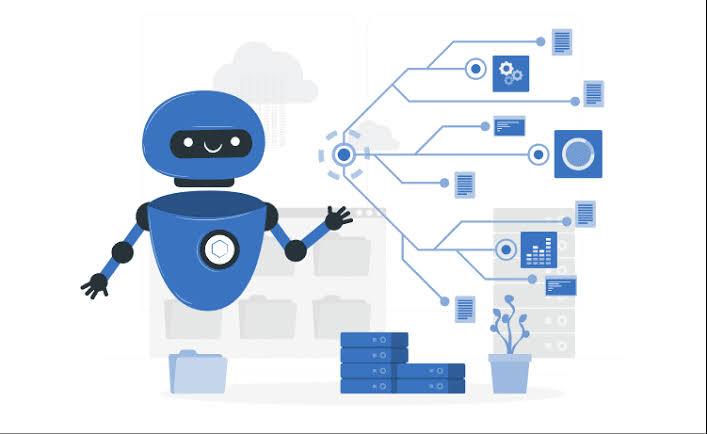
Organizations build centralized knowledge repositories while allowing employees to interact with information naturally.
A new employee asks onboarding questions.
A sales representative requests product positioning.
A customer success manager reviews implementation guidance.
A product leader summarizes user feedback before roadmap planning.
Each interaction improves productivity because knowledge becomes immediately accessible.
The strongest implementations combine ai chat with existing business systems rather than replacing them.
Documentation platforms remain the source of truth.
Project management systems continue tracking execution.
CRM platforms retain customer records.
Communication tools preserve discussions.
ai chat acts as the intelligent interface connecting employees with trusted organizational information.
Series A founders appreciate platform thinking.
Instead of creating isolated solutions for every workflow, they build reusable infrastructure.
ai chat follows the same principle.
One conversational interface supports dozens of business functions.
As adoption grows, organizations refine prompts, improve documentation quality, establish governance standards, and monitor response accuracy.
Those improvements compound over time.
Teams ask better questions.
Knowledge becomes more structured.
Processes become more consistent.
Decision-making accelerates.
Organizations that succeed with ai chat rarely deploy it without strategy.
They identify high-value workflows.
They integrate trusted data sources.
They define clear governance.
They measure adoption and business impact.
They refine implementations continuously.
That disciplined approach transforms ai chat from a productivity feature into core operational infrastructure.
For technical founders balancing rapid growth with limited resources, conversational AI represents more than another software category.
It becomes the fastest interface between people, knowledge, and execution.
The organizations that embrace ai chat thoughtfully create an environment where employees spend less time searching for answers and more time solving meaningful business problems.
A chatbot (originally chatterbot)[1] is a software application or web interface designed to converse through text or speech.[2][3][4] Chatbots are systems that are capable of maintaining a conversation in natural language and simulating the way a human would behave as a conversational partner. Chatbots may use deep learning and natural language processing and have existed for decades.