

The companies that master chatgpt use across every department consistently execute faster than companies that treat AI as an occasional productivity tool.
Why ChatGPT Use Improves Operational Speed
Every Series A company reaches a stage where execution becomes more important than ideas. Product development accelerates, customer expectations increase, and internal communication grows more complex. Teams often respond by adding more meetings, documentation, and management layers. Those solutions increase coordination costs instead of improving productivity.
Chatgpt use offers a different approach.
Instead of spending hours creating first drafts, summarizing meetings, organizing research, or answering repetitive internal questions, employees complete these tasks within minutes and focus on higher-value work.
Consider a software startup preparing a major feature launch.
The project requires:
- Product documentation
- Release notes
- Customer onboarding guides
- Marketing copy
- Internal announcements
- Sales enablement materials
- Frequently asked questions
Traditional workflows assign these tasks across multiple teams, creating bottlenecks during review cycles.
With effective chatgpt use, teams generate structured first drafts quickly, refine them with subject matter expertise, and publish materials much faster.
The technology accelerates execution without replacing professional judgment.
Technical founders already rely on automation for software testing, deployment pipelines, monitoring, and infrastructure management. Chatgpt use extends the same automation philosophy to knowledge work.
Instead of reducing quality, it reduces repetitive effort.
Employees spend more time solving customer problems and less time formatting documents or searching for information.
That shift creates measurable productivity gains across the organization.
ChatGPT Use Creates Better ROI Than Hiring Alone
Growth always creates pressure on resources.
Every new initiative competes for engineering capacity, marketing attention, customer support availability, and operational bandwidth.
Hiring additional employees solves part of the challenge, but recruiting requires time, training, compensation, and ongoing management.
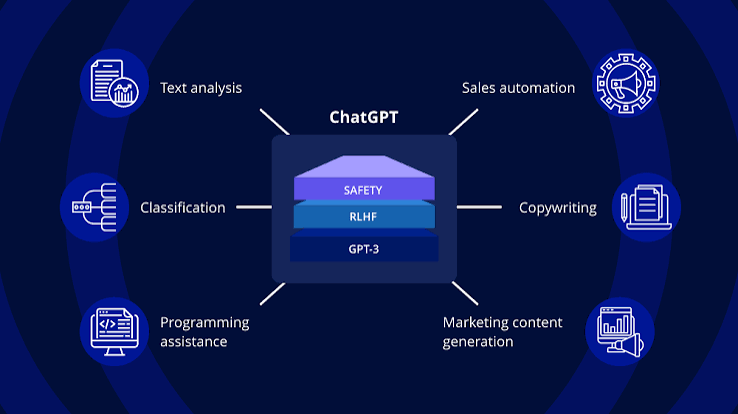
Chatgpt use increases organizational capacity without creating proportional operational complexity.
Marketing teams draft campaign content more quickly.
Sales representatives prepare personalized outreach faster.
Customer success managers summarize account meetings efficiently.
Finance teams organize reports with greater consistency.
Legal professionals review document structures before detailed analysis.
The value appears across repetitive workflows.
Imagine a B2B SaaS company processing hundreds of customer conversations every month.
Account managers must review meeting transcripts, identify action items, prepare follow-up emails, update CRM records, and share insights with product teams.
Without AI assistance, these activities consume a significant portion of each workday.
With disciplined chatgpt use, account managers automate initial summaries, organize customer feedback, and draft communications while maintaining human review before customer interactions.
The workflow becomes faster without sacrificing accuracy.
Return on investment improves because employees allocate more time to relationship building, product strategy, and revenue-generating activities.
Series A founders consistently evaluate investments based on operational leverage.
Chatgpt use delivers leverage by increasing output from existing teams instead of relying exclusively on workforce expansion.
That capability becomes increasingly valuable as organizations scale.
ChatGPT Use Strengthens Decision-Making Through Better Knowledge Access
Fast-growing companies generate enormous amounts of information.
Customer interviews.
Sales conversations.
Engineering discussions.
Market research.
Product analytics.
Support tickets.
Internal documentation.
Meeting notes.
Finding relevant information often takes longer than making the actual decision.
Chatgpt use simplifies that process.
Instead of manually reviewing hundreds of documents, managers ask focused questions and receive structured summaries based on trusted organizational knowledge.
For example, product leaders preparing the next development roadmap might ask:
- Which feature requests appear most frequently?
- Which enterprise customers reported onboarding challenges?
- Which support issues increased after the latest release?
- Which industries show the strongest adoption?
Rather than collecting data from multiple departments manually, chatgpt use organizes available information into actionable summaries.
Leadership reviews insights faster.
Teams identify trends earlier.
Decision-making becomes more efficient.
Marketing organizations experience similar advantages.
Campaign performance data, customer feedback, competitor research, and audience insights often exist across different systems.
AI helps summarize these inputs into structured reports that marketers validate before making strategic decisions.
Engineering teams also benefit.
Developers search API documentation, architectural decisions, deployment procedures, and technical standards through conversational queries rather than manually reviewing extensive documentation libraries.
Knowledge becomes easier to access across the organization.
The result is not simply faster information retrieval.
The result is better-informed execution.
ChatGPT Use Scales Organizational Productivity
As companies grow, communication complexity increases naturally.
New employees join.
Processes evolve.
Documentation expands.
Departments specialize.
Without scalable knowledge systems, productivity declines.
Chatgpt use helps organizations maintain operational efficiency while expanding.
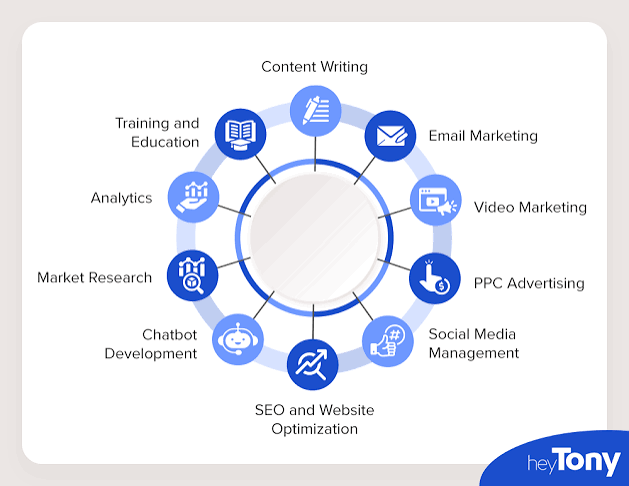
Customer support teams create internal knowledge assistants that summarize troubleshooting procedures.
Human resources organize onboarding resources and answer common employee questions.
Sales organizations retrieve product positioning guidance before customer meetings.
Operations teams generate recurring reports using standardized workflows.
Leadership communicates strategic updates more consistently.
Each department benefits from conversational access to organizational knowledge.
Imagine a startup growing from thirty employees to three hundred.
Without structured systems, institutional knowledge spreads across email threads, chat platforms, spreadsheets, presentations, and individual employees.
Finding accurate information becomes increasingly difficult.
Through effective chatgpt use, organizations connect employees with trusted documentation using natural language instead of complex searches.
New team members become productive more quickly.
Managers answer fewer repetitive questions.
Departments collaborate with greater consistency.
Operational knowledge scales alongside organizational growth.
The strongest companies also establish governance around AI adoption.
They define approved use cases.
They protect confidential information.
They maintain human review for customer-facing content and business-critical decisions.
They continuously improve prompts and workflows based on operational experience.
That disciplined approach transforms chatgpt use from an individual productivity habit into a company-wide operating capability.
For technical founders, the opportunity extends beyond content generation.
The real advantage lies in building repeatable systems that improve execution across every department.
Organizations that integrate AI thoughtfully create faster workflows, stronger collaboration, and more informed decision-making while maintaining the expertise of their teams.
Those benefits compound over time.
Every optimized workflow increases organizational capacity.
Every reusable prompt improves future efficiency.
Every successful implementation strengthens operational resilience.
Companies that treat chatgpt use as strategic infrastructure rather than experimental software position themselves to scale with greater agility, stronger knowledge management, and higher operational efficiency than competitors who continue relying solely on traditional workflows.
ChatGPT is a generative artificial intelligence chatbot developed by OpenAI. Originally released on November 30, 2022, the product uses large language models—specifically generative pre-trained transformers (GPTs)—to generate text, speech, and images in response to user prompts. ChatGPT accelerated the AI boom, an ongoing period marked by rapid investment and public attention toward the field of artificial intelligence (AI). OpenAI operates the service on a freemium model. Users can interact with ChatGPT through text, audio, and image prompts.