
Every hour you fail to prioritize costs more than every dollar you save.
Why Time Management Techniques Create a Competitive Advantage
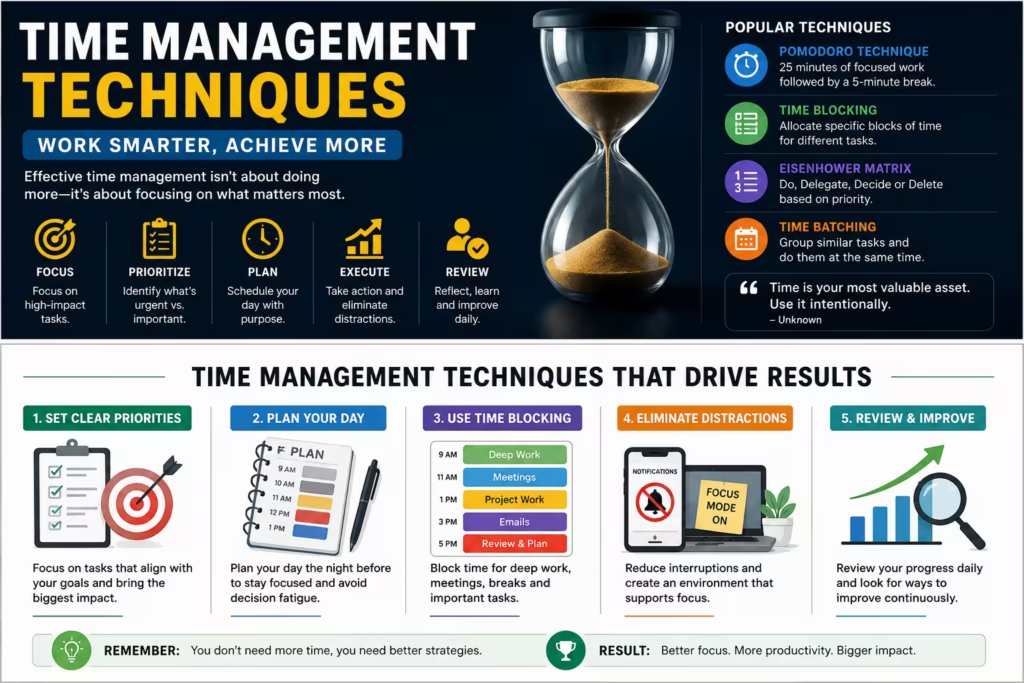
Series A founders rarely struggle because they lack ideas. They struggle because too many priorities compete for the same limited hours. Product development, fundraising, hiring, customer feedback, sales, and operations all demand immediate attention. Without disciplined time management techniques, founders often react to urgency instead of executing strategy.
The highest-performing startups treat time as a finite investment rather than an unlimited resource. Every meeting, decision, and interruption carries an opportunity cost. Strong time management techniques help founders identify high-impact work while reducing activities that generate little business value.
Consider a founder who spends three hours every day responding to low-priority messages. Those hours could instead support customer interviews, product refinement, or strategic hiring. Small improvements in daily scheduling compound into significant gains over months.
Several practical time management techniques consistently improve execution:
- Time blocking for focused work
- Priority-based task planning
- Meeting reduction strategies
- Calendar optimization
- Delegation frameworks
- Deep work sessions
- Context switching reduction
- Daily review systems
These methods do not increase the number of hours available. They increase the value created within those hours.
Technical founders already optimize infrastructure, software performance, and deployment pipelines. Applying the same discipline to personal productivity creates measurable improvements across the organization.
Time Management Techniques Reduce Decision Fatigue
Founders make hundreds of decisions every week.
Some involve hiring.
Others affect pricing, engineering priorities, customer requests, partnerships, or fundraising.
Each decision consumes mental energy.
Strong time management techniques reduce unnecessary decisions by creating repeatable systems.
Instead of deciding every morning what deserves attention, founders establish structured routines.
For example:
- Product reviews every Monday morning.
- Executive meetings every Tuesday.
- Customer interviews every Wednesday.
- Recruiting every Thursday.
- Strategic planning every Friday.
This schedule minimizes constant reprioritization.
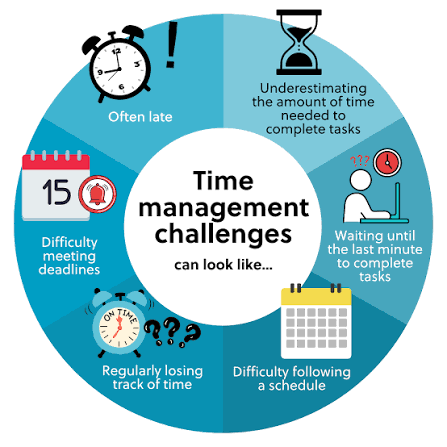
Another effective approach involves categorizing work into four groups:
- High impact and urgent
- High impact but not urgent
- Low impact but urgent
- Low impact and nonessential
Founders often spend excessive time solving urgent but low-impact problems.
Effective time management techniques shift attention toward high-impact activities that influence revenue, customer retention, product quality, and hiring.
Batching similar tasks also improves efficiency.
Instead of checking email every ten minutes, founders process communication during scheduled intervals.
Instead of approving documents throughout the day, they review them together.
Reducing context switching preserves concentration.
Research across productivity studies consistently shows that frequent interruptions reduce focus and increase the time required to complete complex work. For technical founders responsible for architecture, product strategy, or fundraising, uninterrupted thinking often produces higher-value outcomes than constant responsiveness.
Time Management Techniques Improve Team Performance

Founder productivity directly influences organizational productivity.
When leaders constantly change priorities, teams lose momentum.
When leaders communicate clearly and maintain structured schedules, execution improves.
Effective time management techniques extend beyond individual calendars.
They shape company culture.
Consider sprint planning.
Engineering teams perform better when priorities remain stable throughout the sprint.
Frequent interruptions force developers to abandon progress and restart complex work.
Similarly, marketing teams execute stronger campaigns when deadlines remain predictable.
Sales organizations close deals more efficiently when meetings follow structured processes.
Strong founders establish repeatable operating rhythms.
Examples include:
- Weekly leadership meetings.
- Monthly planning reviews.
- Quarterly objective assessments.
- Daily standups with clear agendas.
- Scheduled one-on-one coaching sessions.
Each process reduces uncertainty.
Delegation also plays a major role.
Many founders hesitate to delegate because they believe personal involvement guarantees better quality.
That assumption often limits company growth.
Strong time management techniques encourage founders to identify responsibilities that others can handle effectively.
Administrative approvals.
Calendar coordination.
Routine reporting.
Operational documentation.
Internal communication.
Delegating repetitive work allows founders to focus on strategic decisions that only they can make.
The result is higher organizational output without increasing working hours.
Series A companies frequently experience rapid hiring.
Without structured management systems, communication complexity grows alongside team size.
Effective scheduling and prioritization help organizations scale without overwhelming leadership.
Time Management Techniques Deliver Measurable Business ROI
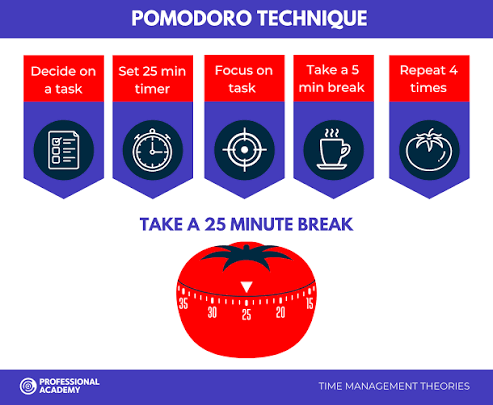
Many productivity discussions focus on motivation.
Growing companies require measurable outcomes instead.
The strongest time management techniques produce observable business improvements.
Founders complete strategic initiatives faster.
Teams reduce unnecessary meetings.
Projects experience fewer delays.
Decision-making accelerates.
Customer issues receive faster resolution.
Hiring processes become more organized.
Product releases occur with greater consistency.
Imagine two startup founders.
Both work sixty hours each week.
Founder A constantly reacts to notifications, accepts every meeting, and frequently changes priorities.
Founder B uses structured time management techniques, blocks uninterrupted work sessions, delegates operational tasks, limits unnecessary meetings, and reviews priorities every morning.
Although both invest the same number of hours, Founder B completes more meaningful work because attention remains focused on business-critical objectives.
This difference compounds over time.
Product improvements reach customers sooner.
Sales initiatives launch faster.
Recruiting pipelines move consistently.
Operational bottlenecks receive earlier attention.
Company growth benefits from improved execution rather than longer working hours.
Technology companies already optimize infrastructure for speed.
They automate deployments.
They monitor system performance.
They reduce latency.
Applying similar optimization principles to leadership creates equally valuable operational gains.
Founders should also review their calendars using performance metrics.
Questions worth asking include:
- Which meetings generated measurable value?
- Which recurring tasks could be automated?
- Which responsibilities should move to another team member?
- Which activities directly influenced revenue or customer satisfaction?
- Which interruptions delayed important work?
Answering these questions transforms time management techniques from personal habits into strategic operating systems.
Companies rarely outperform the quality of their leadership decisions.
Leadership decisions depend heavily on available attention.
Attention depends on effective time allocation.
That relationship explains why disciplined founders often outperform equally talented competitors who lack structured execution systems.
The companies that scale successfully rarely rely on working harder alone.
They improve how work flows across the organization.
Well-designed time management techniques support that improvement by reducing friction, protecting strategic thinking, and enabling faster execution.
For technical founders focused on product velocity, capital efficiency, and sustainable growth, optimizing time delivers returns that compound across every department
Related Post